You’ve just brought your puppy home. The walks should be fun — but the wrong collar or harness can cause neck strain, escape attempts, and hours of frustrated pulling. Most new owners buy the first set they see, not realising that puppies need specific sizing, materials, and fit to stay safe and comfortable.
This guide explains exactly how to choose the best puppy collar and harness set for your dog’s size, breed, and age — so every walk is a good one.
Should a Puppy Wear a Collar or Harness?
This is the most common question new dog owners ask — and the answer is: both, used together.
A collar holds your puppy’s ID tag (legally required in the UK under the Control of Dogs Order 1992) and works well for relaxed lead walking once your dog is trained. A harness distributes pressure across the chest and shoulders instead of the neck, making it the safer option while your puppy is still learning.
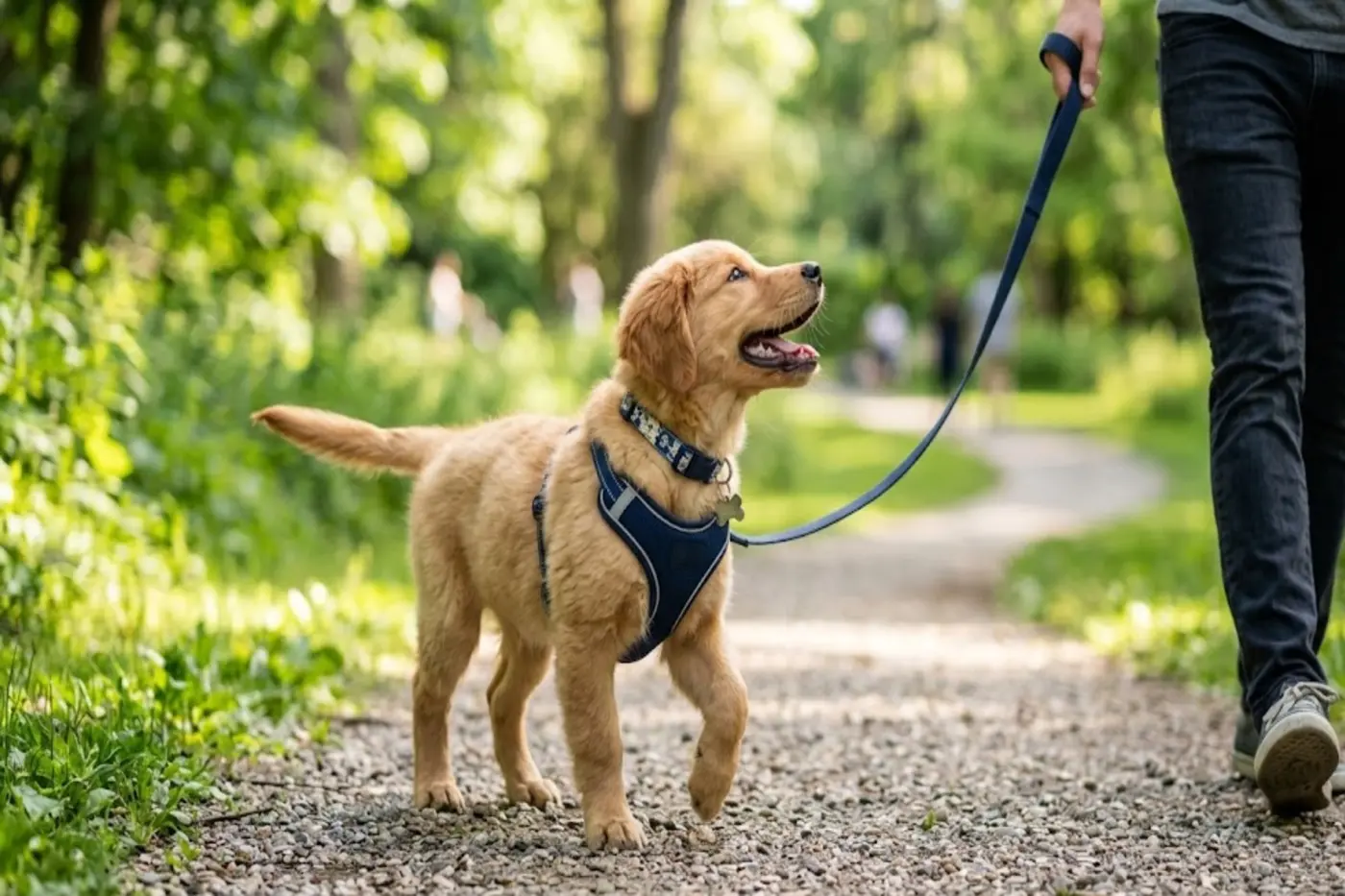
Most trainers recommend using a matching puppy collar and harness set from day one. Your puppy wears the collar for ID, and you clip the lead to the harness for walks. Simple, safe, and effective.
Quick rule: If your puppy pulls, always attach the lead to the harness — never just the collar. Collar-only pulling puts pressure on the trachea and can cause injury in young dogs.
Puppy Collar vs Harness: A Quick Comparison
| Feature | Collar | Harness | Matching Set |
|---|---|---|---|
| Holds ID tag | ✓ | ✗ | ✓ |
| Safe for pullers | ✗ | ✓ | ✓ |
| Comfortable all day | ✓ | Varies | ✓ |
| Good for training | Limited | ✓ | Best option |
| Ideal for small breeds | ✓ | ✓ | ✓ |
The Best Puppy Collar and Harness Set: What to Look For
Not all sets are equal. Here are the features that matter most when choosing a puppy collar and harness for a UK pup.
Adjustable Sizing
Puppies grow fast — sometimes visibly week by week. An adjustable puppy harness with both a neck strap and a chest strap lets you re-fit the harness as your dog grows. Look for a set where both the collar and harness have multiple sizing points.
Soft, Breathable Materials
Hard or stiff materials rub against developing skin. A soft puppy harness made from breathable mesh or padded neoprene sits comfortably during long walks without irritation. At Happy Dogs Togs, our dog collars and harnesses are built for comfort first — because a puppy that finds its gear uncomfortable will resist wearing it.
A Secure Clip System
Young puppies can wriggle out of poorly fitting harnesses — especially anxious or energetic breeds. Look for a harness with two adjustment points and a secure side-release buckle. An escape-proof puppy harness design is essential if your dog is nervous on walks.
Matching Lead Included
The best puppy collar and harness sets come with a matching lead, so collar, harness, and lead all work together. This also means every piece is designed to the same length and material standard — no mismatched hardware or worn stitching.
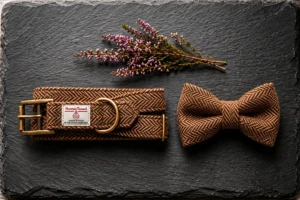
Our Pick of the Best Black Dog Collar With Multi Coloured Bones
Handmade Dog Collars – Puppy Collar and Harness Set

Product Details
RRP : £9.99
Care instructions : Hand Wash Only
Material : Cotton Fabric, Nylon Polypropylene Webbing,Plastic buckle Stainless steel D Ring
Dimensions : 1″ wide X 14″ to 19″ Adjustable
How to Measure Your Puppy for a Harness
Getting the right size is the most important step. Measure before you buy — not after.
What you need: a soft fabric measuring tape.
Step 1 — Neck: Measure around the base of the neck, where the collar will sit. Add 2cm for comfort.
Step 2 — Chest girth: Measure around the widest part of the chest, just behind the front legs. This is the most important harness measurement.
Step 3 — Back length: Measure from the base of the neck to the start of the tail for step-in harness styles.
Compare your measurements against the size chart for any harness before purchasing. If your puppy is between sizes, size up — puppies grow into the next size faster than you expect.
Puppy Harness Size Guide by Breed
| Breed | Typical chest (8–12 weeks) | Recommended harness size |
|---|---|---|
| French Bulldog | 35–42cm | XS–S |
| Cocker Spaniel | 38–46cm | S |
| Labrador Retriever | 42–52cm | S–M |
| Golden Retriever | 44–54cm | S–M |
| Dachshund | 30–38cm | XS |
| Border Collie | 40–50cm | S–M |
| Pug | 33–40cm | XS–S |
Measurements are for puppies at 8–12 weeks. Re-measure every 4–6 weeks during the first year.
How Tight Should a Puppy Collar or Harness Be?
The two-finger rule applies to both collars and harnesses.
Slide two fingers between the collar (or harness strap) and your puppy’s body. If your fingers fit snugly but you can still slide them in easily, the fit is correct. If you can fit a full hand through, it is too loose. If your fingers struggle to fit, it is too tight.
Check the fit weekly. Puppies can gain enough size in a single week that a correctly fitted collar becomes a safety risk.
Signs a harness is too tight: red marks on skin after removal, reluctance to put it on, restricted movement. Signs a harness is too loose: twisting to one side during walks, paw getting caught in straps, slipping out when startled.
Can Puppies Wear a Harness All Day?
No — and it is better for your puppy if you remove it between walks.
Wearing a harness for extended periods can cause pressure sores, skin irritation under the straps, and coat rubbing. Remove the harness after every walk and let your puppy rest in just their flat collar (which holds their ID tag).
A comfortable dog collar worn throughout the day is fine. A harness is a walking tool, not an all-day accessory.
Types of Puppy Harness: Which Is Right for Your Dog?
Step-In Harness
Your puppy steps both front paws into the harness, and you clip it at the back. This style is ideal for small breeds and puppies who dislike having things put over their head.
Back-Clip Harness
The lead clips to a D-ring on the back. Easy to use and comfortable for everyday walks. Best for puppies who don’t pull hard.
Front-Clip (No-Pull) Harness
The lead clips to a ring on the chest. When your puppy pulls forward, the clip redirects them sideways — which quickly teaches them to walk at your pace. A no-pull puppy harness is one of the most effective tools for leash training. Pair it with our natural dog treats as a training reward and you will see results within a few sessions.
Padded Harness
Extra padding across the chest and belly straps prevents rubbing on longer walks. A padded puppy harness is a good choice for active breeds or puppies doing extended exercise once their joints are developed enough.
Adjustable Neck Harness
Adjustable at both the neck and chest, this style grows with your puppy and avoids the need to replace the harness every few weeks. It is the most practical style for puppies under six months.
Introducing a Puppy Collar and Harness Set: A Step-by-Step Plan
Puppies don’t naturally accept wearing gear — it takes a little patience to get them comfortable.
Day 1–2: Let your puppy sniff and investigate the collar and harness before putting them on. Reward with a treat each time they show interest. Our natural dog treats and snacks are ideal for short training sessions — small, soft, and high value.
Day 3–4: Put the collar on for 10 minutes at a time indoors. Reward with a treat immediately and then distract with play. Remove before meals and sleep.
Day 5–7: Once your puppy is comfortable in the collar, introduce the harness in the same way. 10 minutes on, reward, play, remove.
Week 2: Clip the lead to the harness indoors and let your puppy walk around freely. Practice gentle lead pressure indoors before your first outside walk.
First outdoor walk: Keep it short — 5 to 10 minutes. New smells and sounds are exciting enough without making the walk too long. Use your dog treat bag to keep rewards accessible throughout.
Why Buy a Puppy Collar and Harness Set?
Buying a matching puppy collar and harness set makes practical sense beyond just looking great.
Sets are designed so every piece works together — the collar and harness match in width, hardware weight, and material. This means no weak point where a light collar is attached to a heavy lead clip. The matching lead length is correct for a puppy’s stride and training distance. And because the set arrives together, sizing is consistent across every piece.
A well-made set also saves money. Buying collar, harness, and lead separately from different brands often means replacing individual pieces when one wears out. A matched set wears evenly and can be replaced together.
Browse our full range of dog collars and harnesses — each set is designed for everyday UK walks, handmade with durable materials and adjustable for growing puppies.
Puppy Walking Tips for the First Few Months
The collar and harness are tools — but how you use them matters just as much as which ones you choose.
Keep walks short at first. Vets generally recommend no more than 5 minutes of exercise per month of age, twice a day, for young puppies. A 10-week-old puppy should walk for no more than 10 minutes per session.
Let your puppy sniff. Sniffing is mentally tiring for dogs and actually reduces pulling. Allow free sniffing time during every walk rather than rushing from A to B.
Use a treat pouch. Keeping your dog treat bag on your body means rewards are instant. Puppies have short attention spans — a treat needs to arrive within two seconds of the desired behaviour to reinforce it.
Use a lead warning sleeve if needed. If your puppy is reactive or nervous around other dogs, our dog lead warning sleeves give other walkers a clear visual signal to give you space.
Frequently Asked Questions
Should I use a collar or harness for my puppy?
Use both. Fit a flat collar for ID tags and use a harness for walks and lead training. A matching puppy collar and harness set gives you both from day one.
What size harness does a puppy need?
Measure the widest part of your puppy’s chest in centimetres and compare against the size chart for the harness you’re buying. Most puppies aged 8–12 weeks fall in the XS to S range depending on breed.
How tight should a puppy harness be?
You should be able to slide two fingers under any strap comfortably. If the harness twists or your puppy can step out of it, it is too loose.
Can puppies wear a harness all day?
Remove the harness after each walk. All-day wear can cause skin irritation and pressure marks. A flat collar is fine to wear throughout the day for ID.
What age can a puppy start wearing a harness?
Most puppies can wear a harness from 8 weeks old. Make sure the harness is puppy-specific and adjustable — adult harnesses are not safe for young dogs.
Is a no-pull harness good for puppies?
A front-clip no-pull harness works well for puppies learning to walk on a lead. It gently redirects pulling without force or discomfort.
What is the best material for a puppy harness?
Soft neoprene, breathable mesh, or padded fabric are the best options. Avoid stiff webbing materials on young puppies — they cause rubbing during longer walks.
How do I stop my puppy from pulling on the lead?
Use a front-clip harness, keep walks rewarding with treat stops, and change direction frequently so your puppy learns to watch where you go. Consistent short sessions work faster than occasional long ones.