
Finding the best dog training collar in the UK has never been more important – or more confusing. With so much conflicting information online about what’s legal and what isn’t, it can be hard to know where to start. Which collars actually work? Which are legal where you live? And which give you the best value for money?
We’ve researched, tested, and compared the top-rated dog training collars available in the UK right now – covering anti-pull headcollars, vibration remote collars, anti-bark collars, and slip training collars. Whether you have a pulling Labrador, a reactive rescue, or a pup that ignores recall, there’s a collar in this guide for you.
Are Shock Collars Legal in the UK? (2026 Update)
This is the most searched question in this space right now – and one that a surprising number of websites get wrong. Here is the accurate picture as of 2026.
Electric shock collars are currently legal in England, Scotland, and Northern Ireland, although their use is widely condemned. Importantly, in many scenarios their use technically contravenes the Animal Welfare Act 2006, which prohibits causing unnecessary suffering to animals. They have been banned in Wales since 2010.
England: Currently legal. The Government drafted The Animal Welfare (Electronic Collars) (England) Regulations 2023, which proposed banning remote-controlled shock collars from 1 February 2024. However, this legislation was delayed in Parliament and has not yet been passed into law. Remote-controlled shock collars therefore remain legal in England for now, though the proposal has not been abandoned.
Wales: It is illegal to use, sell, or purchase electric shock collars for pets in Wales, under the Animal Welfare (Electronic Collars) (Wales) Regulations 2010. Anyone found guilty faces up to a year in prison and/or a fine.
Scotland: Currently legal, though the Scottish Government advises against their use. The Scottish Animal Welfare Commission recommended a ban in 2023, and while proposals have been debated, no legislation has been passed.
Northern Ireland: Currently legal. There is no specific legislation restricting shock collars, though causing unnecessary suffering remains an offence under the Welfare of Animals Act (Northern Ireland) 2011.
What the experts say: Organisations including the British Veterinary Association (BVA), The Royal Kennel Club, Dogs Trust, the RSPCA, and Battersea actively advocate for a complete UK-wide ban, citing evidence that shock collars cause unnecessary pain and distress to dogs. Their use is strongly discouraged by every major animal welfare and veterinary body in the UK.
What is legal and widely recommended throughout the entire UK:
- Vibration-only remote collars
- Sound/beep collars
- Citronella spray collars
- Anti-pull headcollars
- Slip and martingale training collars
- Remote collars with vibration/tone only (no electric shock)
All collars in this guide use vibration, tone, or physical redirection only — no electric shock. They are fully legal across the entire UK in 2026 and align with the guidance of every major UK animal welfare organisation.
The 5 Best Dog Training Collars in the UK 2026
1. Harris Tweed Large Multi Check Dog Collar And Bow Set
Large size 14 inch to 19 inch X 1 inch wide
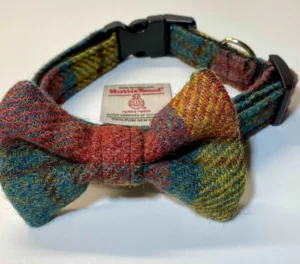
Product Details
- RRP:
- Large size 14 inch to 19 inch X 1 inch wide
- Bow Tie size 4.5″ X 3″ also available to Match
- Heavy Duty silver metal hardware
Care instrutctions : Hand Wash Only
Material : Harris Tweed ,Polypropylene Webbing
Size: Fits 14″to 19″ X 1′”wide
2. Grey Extra Large Harris Tweed Dog Collar
Extra Large size 17 inch to 24 inch X 1.5 inch wide
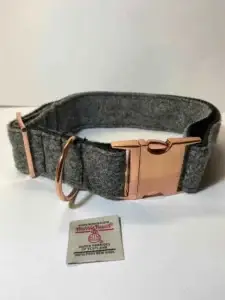
Product Details
- RRP:
- Care instructions: Handwash Only
- Material: Harris Tweed, Polypropylene Webbing
- Dimensions: Fits 17 24″ x 1.5
3. Fawn And Cream Harris Tweed Dog Collar
Medium size 10inch to 16 inch X 3/4 inch wide
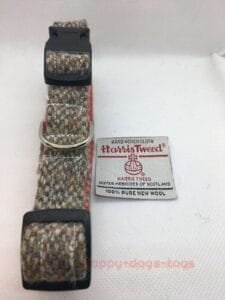
Product Details
- RRP:
- Care instructions : Hand Wash Only
- Material : Harris Tweed, Polypropylene Webbing
- Dimensions : Fits 10 to 16″ X3/4″ wide
4. Green And Purple Harris Tweed Dog Collar
Medium size 10inch to 16 inch X 3/4 inch wide
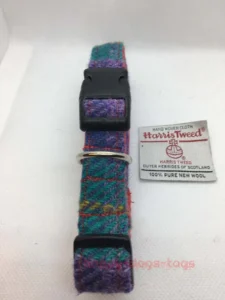
Product Details
- RRP:
- Care instructions : Hand Wash Only
- Material : Harris Tweed, Polypropylene Webbing
- Dimensions : Fits 10 to 16″ X3/4″ wide
5. Harris Tweed Large Orange Dog Collar And Bow Set
Bow Tie size 4.5″ X 3″ also available to Match
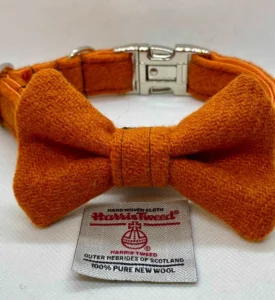
Product Details
- RRP:
- Care instructions : Hand Wash Only
- Material : Harris Tweed ,Polypropylene Webbing
- Dimensions : Fits 14″to 19″ X 1′”wide
Large size 14 inch to 19 inch X 1 inch wide.
Bow Tie size 4.5″ X 3″ also available to Match
Heavy Duty silver metal hardware
How to Choose the Best Dog Training Collar: UK Buyer’s Guide
1. Match the collar type to the problem you’re solving
Not all training collars do the same job. Here’s what each type is designed for:
Remote vibration collars communicate with your dog at a distance. They’re best for recall training, stopping chasing, and off-lead control. Look for at least 10 vibration intensity levels, a range of 500m+, and a waterproof rating if your dog swims.
Anti-pull headcollars physically redirect your dog when they pull. The lead attaches under the chin, so when they lunge forward, their head turns back toward you – breaking the pulling habit without causing harm. Brands like Halti and PetSafe Gentle Leader are the most trusted UK options.
Anti-bark collars detect barking via a vibration sensor in the dog’s throat or a microphone and deliver a corrective beep, vibration, or citronella spray. They work best for dogs that bark out of habit rather than anxiety. The RSPCA advises against using these on dogs with anxiety disorders.
Slip and martingale training collars tighten slightly when a dog pulls and release when they stop. A safety stopper prevents over-tightening. Used correctly with positive reinforcement, they’re effective for teaching heel work and basic obedience.
2. Get the size and fit right
A poorly fitting training collar is unsafe and ineffective. Always measure your dog’s neck before buying:
- Measure around the thickest part of the neck with a soft tape measure
- Add 2 inches (5cm) to this measurement for a flat collar
- The two-finger rule: you should be able to slide two fingers under the collar comfortably
- For headcollars, also measure the circumference of the muzzle
Remote collar receiver units should sit snugly on the side of the neck so the contact points (if present) make consistent contact with the skin.
3. Check it’s legal in your part of the UK
As covered above, remote electric shock collars are advised against in England (since February 2024) and banned in Wales (since 2010). If you’re in Scotland or Northern Ireland, shock collars are technically still legal but use may still risk prosecution under general animal welfare law if it causes distress.
All vibration, tone, spray, headcollar, and slip collar options in this guide are legal throughout the UK.
4. Consider your dog’s temperament
Sensitive or anxious dogs need gentle options – a headcollar or a vibration collar on the lowest setting. For reactive dogs with strong prey drive, a longer-range remote collar gives you more safety margin off lead. For dogs that have never worn a training collar, always introduce it gradually and pair it with rewards before using any correction mode.
5. Look for these quality markers
- Waterproof rating (IP67 or IPX7): Essential if your dog swims or you walk in rain
- Rechargeable battery: More convenient and eco-friendly than disposable batteries
- Safety stopper on slip collars: Prevents the collar tightening beyond a safe point
- Adjustable stimulation levels: At least 8–16 levels gives you precise control
- Quick-release buckle: For safety in emergencies
Dog Training Collar Types Explained
Vibration Remote Training Collars
Remote training collars in the UK now almost exclusively use vibration and sound – not electric shock. The transmitter (handheld remote) sends a signal to the receiver unit on the dog’s collar. You can deliver a beep tone or a vibration to get your dog’s attention at a distance.
They’re most effective for recall training when your dog is distracted by another animal, scent, or person. The vibration is not painful – it’s similar to a phone vibrating on a table. Most trainers recommend pairing the vibration with a recall command first in a controlled environment, then using it in the field.
Anti-Pull Headcollars
Headcollars work on the same principle as a horse headcollar – where the nose goes, the dog follows. The strap fits across the bridge of the nose and behind the ears. The lead clips under the chin, so any forward lunge redirects the dog back toward you.
Popular UK brands: Halti Headcollar, PetSafe Gentle Leader, Beaphar Gentle Leader.
Important: Always use with a regular collar and safety clip so if the headcollar comes loose, your dog is still attached.
Anti-Bark Collars
UK-legal anti-bark collars use one of three corrective signals: a high-pitched tone, vibration, or a burst of citronella spray. They activate automatically when the dog barks – detected by throat vibration or sound.
Vibration-sensor collars are more accurate and less prone to false triggers from other dogs barking nearby. Sound-sensor collars are cheaper but may activate in noisy environments.
The RSPCA advises against using anti-bark collars on dogs that bark from anxiety, as suppressing the bark without treating the underlying anxiety can make the problem worse.
Slip and Martingale Training Collars
A slip collar is a loop of material that tightens when tension is applied and releases when the tension releases. A martingale collar has a smaller loop that limits how tight the main collar can get, preventing choking.
Quality training slip collars have a safety stopper – a fixed point that prevents the collar from tightening beyond a safe diameter. Julius-K9 is the most widely trusted brand for this type in the UK.
These collars should only be used during active training sessions, not as an everyday collar.
Caring for Your Dog Training Collar
Cleaning: Nylon and biothane collars can be wiped with a damp cloth or rinsed under the tap. Leather collars need a leather conditioner every few months. Remote collar receiver units should only be rinsed if rated waterproof – check the IP rating first.
Storage: Keep remote collars fully charged between uses. Store in a cool, dry place. Avoid leaving in a hot car as heat damages lithium batteries.
Inspection: Check the stitching, buckle, and D-ring monthly. Replace any collar with frayed stitching, a stiff buckle, or a bent D-ring immediately.
Battery life: Fully charge remote collars before each training session. Most rechargeable units last 10–15 days per charge with moderate use.
About Happy Dogs Togs
At Happy Dogs Togs, we’ve been designing and selling handcrafted dog collars in Harris Tweed and Scottish Clan Tartan from the UK since 2021. We know dog collars – every day we handle materials, test construction, and talk to dog owners about what works and what doesn’t.
This buying guide is written from genuine product knowledge and owner experience. We only recommend collars we believe are safe, effective, and worth your money.
Have a question about sizing, fitting, or which training collar is right for your dog? Contact us here →
Frequently Asked Questions: Best Dog Training Collars UK
Are shock collars banned in the UK?
Only in Wales, where it is illegal to use, sell, or purchase electric shock collars for pets under the Animal Welfare (Electronic Collars) (Wales) Regulations 2010. In England, a ban was proposed under The Animal Welfare (Electronic Collars) (England) Regulations 2023, but it has not yet been passed into law due to delays in Parliament. Shock collars remain legal in England, Scotland, and Northern Ireland as of 2026, although their use is widely condemned and in many scenarios may technically contravene the Animal Welfare Act 2006. Organisations including the BVA, Dogs Trust, the Royal Kennel Club, and the RSPCA continue to campaign for a complete UK-wide ban. All collars in this guide use vibration or tone only — no electric shock — and are fully legal across the entire UK.
What is the best no-shock dog training collar in the UK?
The best no-shock training collar depends on your goal. For recall and distance training, a vibration remote collar is most effective. For pulling, an anti-pull headcollar like the Halti is better. For barking, a vibration anti-bark collar works well. See our comparison table at the top of this guide for specific product recommendations.
Do vibration dog training collars work?
Yes, vibration collars are effective when used correctly as part of a consistent training programme. They work by getting your dog’s attention – the vibration is a clear, distinct signal your dog learns to associate with a command. They are not painful. Studies show they are as effective as shock-based correction for basic training tasks when paired with positive reinforcement.
What is the best dog training collar for a puppy in the UK?
For puppies, a headcollar or a soft martingale collar is best. Remote vibration collars are generally not recommended for dogs under 6 months old or under 5kg. Always prioritise positive reinforcement for puppies and introduce any collar gradually with plenty of reward.
How do I fit a dog training collar correctly?
For flat and slip collars, use the two-finger rule – you should slide two fingers under the collar comfortably. For headcollars, follow the brand’s sizing guide using your dog’s nose circumference measurement. For remote collars, the receiver unit should sit snugly on the side of the neck so the contact points touch the skin without pressing in hard.
Can I use a training collar on a reactive dog?
It depends on the type of reactivity. Anti-pull headcollars are generally safe for reactive dogs as they give you physical control without causing pain. Vibration remote collars should only be introduced slowly and with the guidance of a professional trainer for reactive dogs, as incorrect use can increase anxiety and make reactivity worse.
Are citronella anti-bark collars legal in the UK?
Yes. Citronella spray anti-bark collars are legal throughout the UK. They emit a short burst of citronella under the dog’s nose when barking is detected. They are considered a more humane alternative to shock-based correction, though the RSPCA still advises against using them on anxious dogs.
Related Guides from Happy Dogs Togs
- Harris Tweed Dog Collars – Handmade in the UK →
- Scottish Tartan Dog Collars – Unique Clan Designs →
- Dog Collars and Harnesses – Full Range →
- Natural Dog Treats for Reward-Based Training →
© Happy Dogs Togs 2026 | happydogstogs.com | Last reviewed: April 2026