Many dog owners select accessories based on aesthetics alone, overlooking how comfort profoundly affects their pet’s health and behaviour. Uncomfortable collars or harnesses can increase stress, trigger physical issues like elevated eye pressure, and create resistance during walks. This article explores why prioritising comfort alongside style benefits your dog’s wellbeing, which features define truly comfortable accessories, and how handcrafted materials like Harris tweed blend durability with gentle support. You’ll discover practical guidance for selecting, fitting, and maintaining accessories that keep your dog happy and healthy.
Table of Contents
- Key takeaways
- How comfort affects your dog’s health and behaviour
- Features that define comfort in dog accessories
- Balancing style and comfort with handcrafted fabrics
- Selecting and caring for comfortable dog accessories
- Explore handcrafted dog accessories combining comfort and style
- Frequently asked questions
Key Takeaways
| Point | Details |
|---|---|
| Comfort affects health | Uncomfortable collars or harnesses increase stress and may elevate eye pressure in certain brachycephalic breeds. |
| Harnesses reduce neck pressure | For flat faced breeds a well fitted harness protects ocular health by distributing pressure away from the neck. |
| Quality materials matter | Handcrafted options such as Harris Tweed blend durability with gentle support. |
| Proper fit matters | The two finger rule helps ensure a secure yet comfortable fit without restricting movement. |
| Spot discomfort signs | Behavioural cues like scratching, reluctance to walk, or aggression when handling accessories indicate discomfort and require adjustment. |
How comfort affects your dog’s health and behaviour
The accessories your dog wears daily influence their physical health and emotional state more than most owners realise. Research demonstrates that dogs pull with greater force when wearing harnesses, which may reflect their comfort distributing pressure across the chest and shoulders rather than concentrating it on the neck. This force distribution matters because collars can create concentrated pressure points that affect delicate structures.
Brachycephalic breeds like pugs and bulldogs face particular risks with traditional collars. Studies show that collars increase intraocular pressure in short-nosed dogs, whilst harnesses produce no such elevation. This pressure increase can worsen existing eye conditions or contribute to new problems over time. If your dog belongs to a flat-faced breed, switching to a well-fitted harness protects their ocular health during every walk.
Comfortable accessories reduce stress-related behaviours that frustrate both dogs and owners. When your pet feels restricted, irritated, or in pain from poorly designed gear, they may exhibit:
- Excessive scratching at the collar or harness
- Refusing to move forward during walks
- Aggressive reactions when you approach with accessories
- Decreased enthusiasm for outdoor activities
These behavioural changes signal that your dog associates the accessory with discomfort. Addressing fit and material quality often resolves these issues quickly.
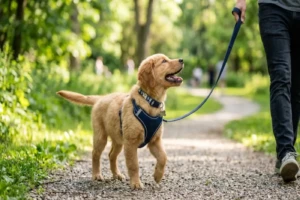
Choosing between a harness and collar depends on your dog’s size, health status, and activity level. Small breeds with delicate tracheas benefit from harnesses that eliminate neck pressure entirely. Larger dogs who pull benefit from the control and safety harnesses provide. However, well-behaved dogs without respiratory or eye concerns may comfortably wear quality collars for identification purposes.
Comfort in dog accessories isn’t a luxury, it’s a health requirement that prevents physical harm and emotional distress whilst supporting positive walking experiences.
The connection between physical comfort and behavioural wellbeing extends beyond walks. Dogs wearing uncomfortable accessories throughout the day experience chronic low-level stress that affects their overall temperament. Investing in properly fitted, well-designed pieces creates a foundation for your dog’s daily happiness and long-term health.
Features that define comfort in dog accessories
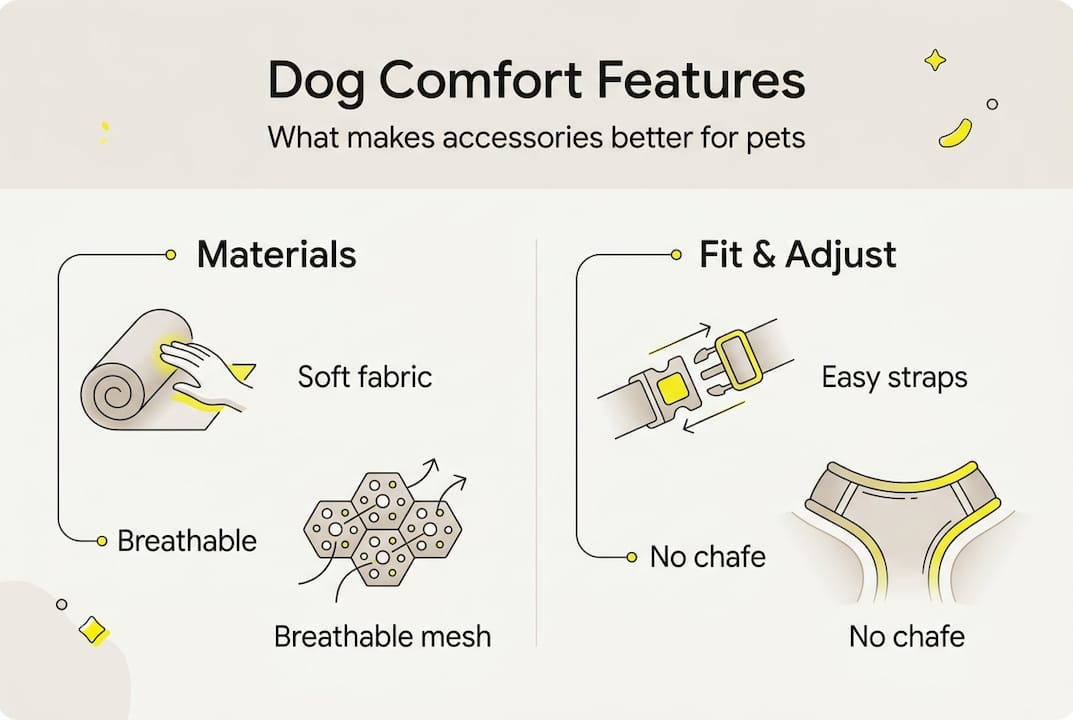
Identifying truly comfortable accessories requires understanding specific design elements that protect your dog’s skin, distribute pressure evenly, and accommodate natural movement. The most reliable benchmark for proper fit involves the two-finger rule: you should slide two fingers comfortably between the accessory and your dog’s body without forcing or leaving excessive slack. This spacing prevents both restriction and slipping.
Smooth, padded edges distinguish quality accessories from cheaper alternatives. Rough seams or unfinished edges create friction points that rub against your dog’s fur and skin during movement, leading to irritation, hair loss, or abrasions. Look for accessories with:
- Soft padding along all contact surfaces
- Rolled or bound edges that eliminate sharp transitions
- Smooth hardware without protruding screws or rough metal
- Reinforced stitching that lies flat against the fabric
Breathable fabrics prevent the skin problems that develop when moisture and heat become trapped against your dog’s body. Proper breathability, adjustable fit, and padded edges rank as essential comfort features according to canine comfort research. Synthetic materials often trap heat and moisture, creating environments where bacteria and fungi thrive. Natural fibres like wool allow air circulation whilst wicking moisture away from the skin.
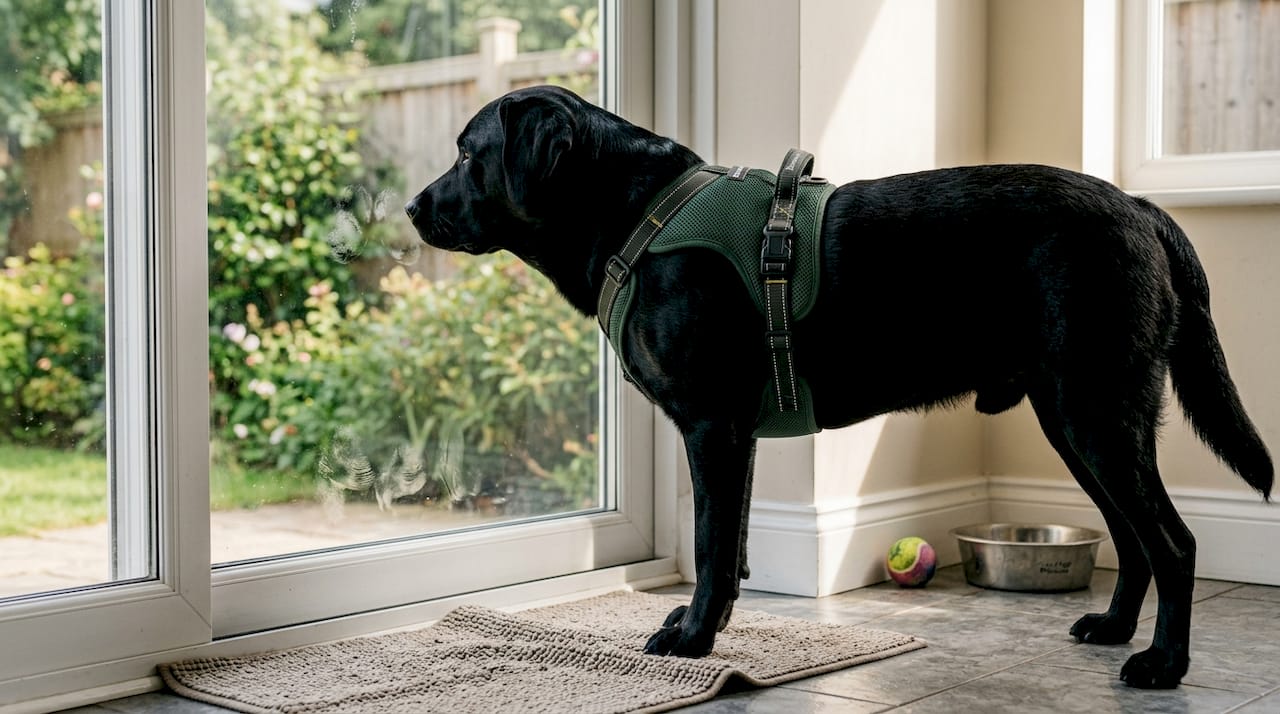
Harris tweed exemplifies how traditional materials meet modern comfort needs. This handwoven fabric combines 100% virgin wool fibres that naturally regulate temperature, resist water whilst remaining breathable, and withstand years of daily wear. The material’s durability means accessories maintain their shape and comfort properties through countless adventures. Many bespoke Harris tweed dog accessories offer machine-washable convenience alongside their comfort benefits.
Pro Tip: Watch your dog’s behaviour when you first put on a new accessory. Immediate scratching, trying to remove it with paws, or freezing in place indicates discomfort that requires adjustment or replacement before establishing negative associations.
Your dog communicates discomfort through subtle and obvious signals. Frequent scratching at the collar area, reluctance to approach when you hold the accessory, or changes in gait during walks all suggest fit or material problems. Some dogs develop red patches, hair thinning, or raw spots where uncomfortable accessories create constant friction. Regular inspection of your dog’s skin beneath accessories helps catch problems before they escalate into infections or chronic irritation.
Adjustability extends an accessory’s useful life whilst maintaining optimal comfort as your dog grows or their coat thickness changes seasonally. Quality pieces feature multiple adjustment points that allow fine-tuning without compromising structural integrity. This flexibility proves especially valuable for puppies still growing and for breeds with significant seasonal coat changes.
Balancing style and comfort with handcrafted fabrics
Handcrafted materials like Harris tweed and wool tartan prove that choosing between aesthetics and comfort creates a false dilemma. These traditional fabrics deliver distinctive visual appeal whilst providing superior comfort properties that mass-produced synthetics cannot match. Harris tweed’s status as 100% virgin wool means each fibre retains its natural crimp and elasticity, creating a fabric that moves with your dog rather than restricting them.
The handwoven construction of these materials introduces subtle texture variations and pattern uniqueness that make each piece genuinely one of a kind. Unlike printed patterns on synthetic bases, woven tartans and tweeds display depth and richness that photographs cannot fully capture. This craftsmanship appeals to owners who value individuality and heritage in their dog’s accessories.
Durability ranks among the most practical benefits handcrafted fabrics offer. Harris tweed provides sustainability, easy maintenance, and superior comfort with style according to material analysis. The tight weave and quality fibres resist the wear patterns that quickly degrade cheaper alternatives. Edges don’t fray, colours don’t fade dramatically, and the fabric maintains its shape through years of use.
| Material | Breathability | Durability | Maintenance | Style versatility |
|---|---|---|---|---|
| Harris tweed | Excellent | Very high | Machine wash | Classic patterns |
| Wool tartan | Excellent | High | Hand wash preferred | Traditional Scottish |
| Cotton canvas | Good | Moderate | Machine wash | Casual modern |
| Nylon webbing | Poor | High | Easy clean | Limited colours |
| Leather | Moderate | Very high | Conditioning required | Timeless elegant |
These materials resist wear whilst remaining gentle against your dog’s skin because natural wool fibres don’t create the same friction as synthetic alternatives. The fibres’ natural crimp provides cushioning that prevents pressure points even during extended wear. This gentleness matters particularly for dogs with sensitive skin or those recovering from irritation caused by previous accessories.
Stylish patterns like tartan complement both casual and formal occasions, allowing your dog to look polished at the park or sophisticated at gatherings. The classic aesthetic of these patterns means they never appear dated or trendy in ways that quickly become embarrassing. Dog fashion trends in 2026 increasingly favour these heritage materials as owners seek alternatives to fast-fashion pet accessories.
Pro Tip: Tartan patterns hide minor dirt and wear better than solid colours, maintaining a fresh appearance between washes whilst the natural wool resists odour absorption that plagues synthetic materials.
Sustainability concerns motivate many owners to choose handcrafted natural fibres over petroleum-based alternatives. Wool represents a renewable resource that biodegrades naturally, unlike synthetic materials that persist in landfills for decades. The longevity of well-made tweed and tartan accessories further reduces environmental impact by eliminating the need for frequent replacements.
Machine-washable Harris tweed accessories challenge the assumption that natural, handcrafted materials require fussy care routines. Following basic care instructions preserves both comfort and appearance whilst fitting seamlessly into busy households. This practical maintenance requirement makes premium materials accessible to everyday dog owners rather than remaining exclusive to those willing to invest significant time in accessory care.
Selecting and caring for comfortable dog accessories
Measuring your dog accurately forms the foundation for selecting properly fitted accessories that deliver comfort throughout their life. Use a soft measuring tape to record your dog’s neck circumference at the widest point, typically where a collar naturally sits. For harnesses, you’ll also need chest measurements taken around the ribcage just behind the front legs. Write these measurements down and add two inches to determine the appropriate size range for most accessories.
Follow this step-by-step adjustment process when introducing new accessories:
- Place the accessory on your dog without fastening it completely, allowing them to investigate and sniff it calmly.
- Fasten loosely and check that you can easily slide two fingers underneath at multiple points around the circumference.
- Tighten gradually whilst monitoring your dog’s comfort, stopping when the two-finger test shows proper snugness without restriction.
- Walk your dog indoors for five minutes, observing their gait and checking for any rubbing or restriction of movement.
- Inspect their skin beneath the accessory after this trial period, looking for any redness or flattened fur indicating pressure points.
- Make final adjustments based on these observations before using the accessory for extended periods outdoors.
Washing accessories according to fabric-specific care instructions maintains the softness and structural integrity that defines comfort. Harris tweed dog accessories typically offer machine-washable, sustainable options that simplify maintenance whilst preserving comfort properties. Use cool water and mild detergent, avoiding fabric softeners that can coat natural fibres and reduce breathability. Air drying prevents shrinkage and maintains shape better than tumble drying.
| Maintenance task | Frequency | Purpose | Method |
|---|---|---|---|
| Visual inspection | Daily | Identify wear or damage early | Check stitching, hardware, fabric condition |
| Skin check | Weekly | Detect irritation before worsening | Examine skin beneath accessory for redness |
| Deep cleaning | Monthly | Remove accumulated dirt and oils | Follow fabric care instructions |
| Fit reassessment | Quarterly | Account for growth or weight changes | Repeat two-finger test, adjust as needed |
Rotating seasonal accessories matches weather conditions whilst preserving comfort and extending accessory lifespan. Lighter weight tartans suit warmer months, whilst thicker Harris tweed provides welcome insulation during winter walks. This rotation prevents any single piece from experiencing excessive wear and allows you to wash items thoroughly between uses.
Monitoring your dog’s reaction after introducing new gear reveals comfort issues that measurements alone might miss. Some dogs need several short sessions to adjust psychologically even when the physical fit proves perfect. Others immediately relax into comfortable accessories, showing increased enthusiasm for walks. Trust your dog’s signals over assumptions about what should work.
Choosing seasonal dog accessories requires balancing climate demands with your dog’s coat type and activity level. Double-coated breeds need less insulation from accessories than short-haired breeds, whilst highly active dogs generate more body heat than sedentary companions. Consider these individual factors rather than following generic seasonal recommendations.
Storage between uses protects accessories from damage that compromises comfort. Hang collars and harnesses rather than folding them to prevent permanent creases that create pressure points. Store in cool, dry locations away from direct sunlight that can fade colours and weaken fibres over time. Proper storage ensures accessories remain as comfortable on their hundredth use as their first.
Explore handcrafted dog accessories combining comfort and style
Your dog deserves accessories that honour both their comfort and your aesthetic preferences without compromise. Handcrafted pieces made with Harris tweed and wool tartan deliver this balance through materials selected specifically for their wellbeing benefits and timeless visual appeal.
Discover collections featuring collars, harnesses, and bow ties that combine supreme comfort with sustainable materials and classic Scottish style. Each piece reflects careful attention to the features that matter: proper padding, breathable natural fibres, and adjustability that accommodates your dog’s unique proportions. Browse must-have dog accessories for stylish dogs that prioritise your pet’s wellbeing whilst making every walk a statement of quality and care. Explore dog accessory collections defined by style and quality craftsmanship, or shop handcrafted dog accessories designed with your dog’s comfort as the foundation for lasting style.
Frequently asked questions
How do I know if my dog accessory is comfortable?
Watch for relaxed behaviour during and after wearing the accessory. Your dog should move naturally without scratching, pulling away, or showing reluctance when you approach with the item. Check fit using the two-finger rule: you should slide two fingers comfortably between the accessory and your dog’s body at multiple points. Inspect skin regularly for redness, hair loss, or irritation beneath the accessory. Signs of comfort in dog accessories include maintained enthusiasm for walks and absence of behavioural changes after putting the accessory on.
What are the benefits of using harnesses over collars?
Harnesses distribute pulling pressure across your dog’s chest and shoulders rather than concentrating force on the delicate neck structures. Research shows harnesses reduce eye pressure and distribute forces more safely than collars, particularly benefiting brachycephalic breeds prone to respiratory and ocular problems. They provide better control for strong pullers without risking tracheal damage. Small breeds with fragile windpipes especially benefit from this pressure distribution. However, harness and collar benefits vary based on individual dog characteristics, so consider your pet’s specific needs.
How do handcrafted fabrics improve dog accessory comfort?
Natural wool fibres in handcrafted materials provide inherent softness and temperature regulation that synthetics cannot replicate. Harris tweed offers breathability, durability, and machine-washable sustainability whilst improving comfort through moisture-wicking properties and natural elasticity. The handwoven construction creates subtle texture that prevents the rigid stiffness common in mass-produced alternatives. These fabrics move with your dog rather than restricting them, whilst the natural crimp in wool fibres provides cushioning that reduces pressure points. The durability ensures accessories maintain their comfort properties through years of use rather than degrading quickly.
How often should I replace my dog’s accessories?
Replace accessories when you notice fraying, hardware malfunction, loss of adjustability, or when they no longer pass the two-finger fit test due to your dog’s growth. Quality handcrafted pieces often last several years with proper care, whilst cheaper alternatives may need replacement within months. Inspect accessories weekly for signs of wear that could compromise comfort or safety. Even durable materials eventually show wear in high-friction areas. If your dog develops new behavioural resistance to a previously accepted accessory, examine it carefully for hidden damage or fit changes that create discomfort.
Can I use the same accessories year-round?
Whilst possible, rotating seasonal accessories optimises comfort across temperature extremes. Lighter tartans suit warmer weather, preventing overheating whilst maintaining style. Thicker Harris tweed provides welcome insulation during winter walks for short-haired breeds. Consider your dog’s coat type: double-coated breeds tolerate heavier accessories in summer better than fine-coated breeds. Activity level matters too, since highly active dogs generate more body heat. Having multiple accessories allows thorough washing and drying between uses, extending each piece’s lifespan whilst ensuring your dog always wears fresh, comfortable gear.