Attaching dog tags to handmade tartan collars challenges even experienced pet owners. The delicate fabric demands careful handling, yet tags must stay secure for your dog’s safety. This guide walks you through proven attachment methods that protect both your collar’s craftsmanship and your pet’s identification, covering everything from choosing durable hardware to monthly maintenance checks that prevent loss.
Table of Contents
- Introduction To Attaching Dog Tags To Tartan Collars
- Prerequisites And Materials Needed
- Best Method To Attach Dog Tags To Tartan Collars
- Alternative Attachment Methods And Their Tradeoffs
- Maintenance, Common Mistakes, And Troubleshooting
- Expected Outcomes And Longevity Of Attachments
- Explore Stylish Tartan Collars & Accessories At Happy Dogs Togs
- Frequently Asked Questions
Key Takeaways
| Point | Details |
|---|---|
| Split rings provide maximum security | Durable hardware like split rings and quality D-rings keep tags attached through active use |
| Stainless steel resists tarnishing | Choosing corrosion-resistant tag materials preserves appearance on wool and tweed collars |
| Monthly inspections prevent 87% of losses | Regular checks catch wear early and stop accidental detachment |
| Attachment method affects longevity | Sewing offers permanence but risks fabric damage, while clips enable easy swaps |
| Proper fit reduces collar wear | Two-finger rule ensures comfort and minimizes stress on tags and collar fabric |
Introduction to Attaching Dog Tags to Tartan Collars
Handmade tartan collars deserve attachment methods that honour their craftsmanship. These collars, especially those made from Harris tweed or wool tartan, feature delicate weaves that standard hardware can damage. Yet dog tags remain essential for your pet’s safety and quick identification if they wander.
Improperly attached dog tags frequently detach, causing loss of identification and peace of mind. Standard attachment approaches often overlook the unique needs of tartan fabrics, leading to fraying, discolouration, or torn D-ring stitching. Your collar’s beauty shouldn’t come at the cost of security.
This guide addresses those specific challenges:
- Material selection compatible with tartan weaves
- Hardware that distributes stress evenly
- Step-by-step attachment techniques that preserve fabric integrity
- Maintenance routines tailored to wool and tweed collars
Whether you’ve invested in a tartan collar or craft them yourself, you’ll learn to attach tags securely without compromising style. The methods here work for daily wear collars and special occasion pieces alike. We’ll cover everything from split ring installation to alternative systems like carabiners, helping you choose what works best for your dog’s activity level and your aesthetic preferences.
Prerequisites and Materials Needed
Successful tag attachment starts with compatible materials and proper preparation. Your choices here determine both security and longevity.
Collar and Tag Materials
Harris tweed and wool tartan collars need hardware that won’t snag their tight weaves. Stainless steel or brass tags resist tarnishing and maintain appearance against tartan patterns. Avoid aluminium tags on wool collars as they scratch easily and dull quickly.
For collars, verify the D-ring attachment uses reinforced stitching. Quality tartan collars feature double or triple stitched D-rings that handle tag weight during active play. Check that the ring itself is welded closed, not simply bent into a circle.
Essential Tools and Hardware
| Tool | Purpose | Quality Indicator |
|---|---|---|
| Split rings | Primary attachment | Stainless steel, 10mm+ diameter |
| Needle-nose pliers | Ring manipulation | Cushioned grip, rust-resistant |
| Carabiner clips | Quick release option | Screw-lock gate, rated load |
| Measuring tape | Collar fit verification | Flexible, metric and imperial |
Split rings work best for permanent attachment. Choose rings slightly smaller than your D-ring diameter so they move freely but can’t slip off. Pliers protect your fingers and prevent ring warping during installation.
Pro tip: Keep spare split rings in your dog’s travel kit. They weigh nothing but save you stress if a ring fails during trips.
Sizing and Fit Requirements
Proper collar fit allows two fingers between collar and neck. This ensures comfort and prevents excessive tag movement that loosens attachments. Measure your dog’s neck at its widest point, then add two inches for the collar length.

Tag size matters too. Large tags on small D-rings create leverage that stresses stitching. Match tag diameter to roughly half your D-ring size. A red green tartan collar with a 20mm D-ring pairs well with 25-30mm tags.
Engraving Considerations
Engraving essential information like your phone number and vaccination status improves tag usefulness. Keep text concise so it remains legible after months of wear. Deep engraving lasts longer than surface etching on stainless steel.
Avoid decorative fonts that fill with dirt. Simple block letters stay readable even when tags accumulate grime. Include your postcode rather than full address to save space while maintaining usefulness.
Pre-Attachment Inspection
Before attaching anything, inspect your collar thoroughly:
- Check D-ring stitching for loose threads or gaps
- Verify the D-ring rotates freely without fabric binding
- Look for existing wear spots near the ring attachment
- Test buckle security and adjustment holes
Address any issues now. Replacing a worn D-ring before attachment prevents future tag loss and potential collar failure when your dog pulls.
Best Method to Attach Dog Tags to Tartan Collars
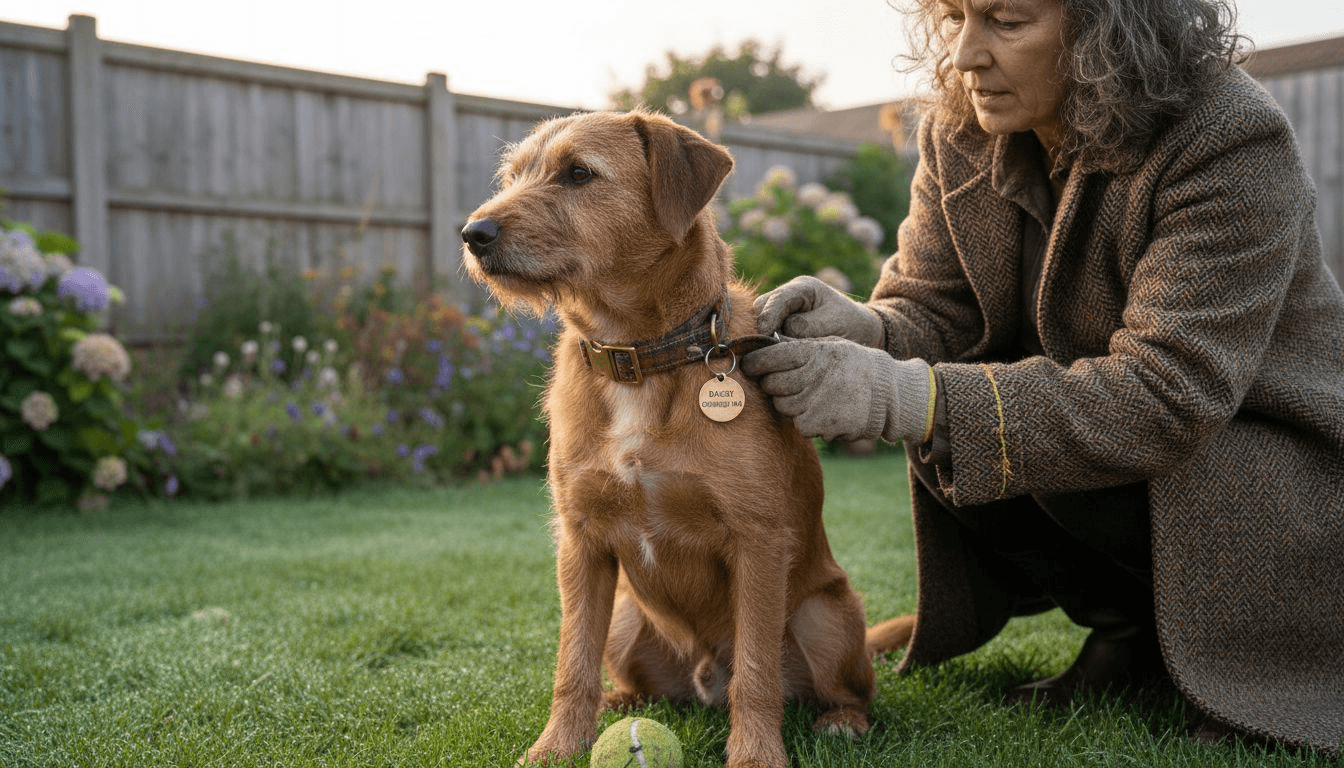
The most secure attachment uses a closed, sturdy split ring threaded through the tag hole and fastened to the collar’s metal D-ring. This method distributes stress evenly and prevents accidental openings during play.
Follow these steps for reliable attachment:
Gather your materials. Lay out your tartan collar, dog tag, split ring, and needle-nose pliers on a clean surface. Good lighting helps you see the ring gap clearly.
Inspect the D-ring. Hold the collar and rotate the D-ring, checking that it moves smoothly. Wipe away any dirt or debris that might interfere with the split ring.
Open the split ring carefully. Use pliers to grip one end of the ring, then twist gently to create a gap. Don’t pull the ends apart as this weakens the metal. The twisting motion maintains ring integrity.
Thread the tag first. Slide the tag onto the split ring before approaching the collar. This prevents awkward angles that might scratch your tartan fabric. Keep the ring opening small to maintain control.
Attach to the D-ring. Guide the split ring through the D-ring while keeping the tag clear of the collar fabric. Rotate the split ring around the D-ring using the pliers, never forcing it.
Close and test. Once fully threaded, release the split ring and verify it has no gap. Tug the tag gently in multiple directions. It should move freely but never slide towards the ring opening.
Pro tip: Work over a towel or soft surface. If you drop the split ring, it won’t bounce away or scratch your floor.
“The split ring method provides peace of mind because the ring must unwind completely for the tag to detach, which rarely happens during normal activity. Testing after installation confirms security before your dog wears the collar.”
The attachment should produce no clicking sounds when the tag moves. Clicking indicates the split ring isn’t fully closed or the D-ring has a sharp edge. Address these issues immediately to prevent fabric damage.
For tartan collars with particularly delicate weaves, place a finger behind the D-ring during threading. This backing support prevents pressure from transferring to the stitching.
Alternative Attachment Methods and Their Tradeoffs
While split rings offer maximum security, other methods suit specific situations. Understanding the tradeoffs helps you choose what works for your lifestyle.
Quick Comparison of Attachment Methods
| Method | Security Level | Ease of Use | Fabric Risk | Best For |
|---|---|---|---|---|
| Split rings | Excellent | Moderate | Very low | Daily wear, active dogs |
| Carabiner clips | Good | Excellent | Low | Frequent tag changes |
| Permanent sewing | Excellent | Difficult | Moderate | Single tag setups |
| S-hooks | Poor | Easy | Low | Temporary use only |
Carabiner Clips for Convenience
Carabiner clips reduce installation time and enable quick tag swaps, ideal for thick D-rings. Choose clips with screw-lock gates that prevent accidental opening. The added bulk suits medium to large dogs but may overwhelm small breed collars.
Clips work brilliantly when you rotate between multiple collars. Simply unscrew the gate, move the tags, and reattach. This convenience comes at a slight security cost, as screw mechanisms can loosen over time.
Permanent Sewing Considerations
Sewing dog tags permanently increases security but risks fabric damage and requires sewing skills. This method suits situations where you never need to remove tags, such as service dog identification.
Thread the tag directly onto strong thread, then sew through the collar webbing near the D-ring. Use waxed thread designed for leather work as it resists moisture and abrasion. However, needle holes in tartan fabric can fray over time, especially with wool weaves. Consider reinforcing the area with a small leather backing piece.
Key sewing method considerations:
- Creates permanent modification to your collar
- Requires precise stitching to avoid visible damage
- Makes tag replacement difficult
- Eliminates jingling sounds from metal-on-metal contact
Methods to Avoid
S-hooks and basic wire loops present serious risks. S-hooks can slip off if not tightly crimped, and crimping weakens the metal over time. The open design lets tags slide off during fence climbing or rough play.
Adhesive methods damage fabric and fail quickly. Glues and tapes leave residue on tartan weaves that attracts dirt. Temperature changes cause adhesives to release, dropping tags unexpectedly. Never rely on adhesive products for primary attachment.
For tartan accessory care, prioritize methods that don’t alter the fabric permanently. Removable hardware preserves your collar’s resale value and allows easy cleaning.
Maintenance, Common Mistakes, and Troubleshooting
Regular maintenance extends attachment life and prevents loss. Monthly inspection reduces accidental tag loss by identifying wear or loosening early.
Routine Inspection Checklist
Set a calendar reminder to check these points monthly:
- Rotate the split ring around the D-ring, feeling for rough spots
- Examine the ring for gaps, cracks, or thinning metal
- Check D-ring stitching for loose threads or separation
- Verify tags remain legible and free of sharp edges
- Test collar buckle security and adjustment fit
Catch issues early and replacement takes minutes. Wait until failure and you risk losing tags during walks or boarding.
Critical Mistakes That Cause Tag Loss
S-hooks and adhesives represent the most common failures. S-hooks slip off if not tightly crimped, and crimping creates stress points that crack under repeated movement. Adhesives fail when wet and leave sticky residue that damages tartan patterns.
Oversized tags on small D-rings create leverage during play. This stress concentrates at the stitching point, eventually tearing the fabric. Always match tag size to collar scale.
Skipping the two-finger fit test leads to excessive collar movement. Loose collars allow tags to catch on obstacles, pulling hardware apart. Tight collars restrict breathing and damage fabric through constant tension.
Pro tip: Clean split rings and D-rings with a damp cloth monthly. Dirt acts as an abrasive that wears metal faster. For tartan collar maintenance, use wool-safe cleaning solutions that won’t strip natural oils.
Fixing Common Attachment Problems
Loose tags that slide excessively indicate a worn split ring. Replace it immediately rather than risk loss. Keep spare rings in your grooming kit so you can swap them during routine checks.
If your D-ring rotates stiffly, debris has built up in the stitching. Use a soft brush to remove dirt, then check that stitching remains intact. Stiff rotation stresses attachment points unnecessarily.
Jingling tags bother some dogs and owners. Slide a small rubber grommet onto the split ring between tags to dampen sound. Craft stores sell these grommets in various colours that can complement your tartan pattern’s role in dog fashion.
When to Replace Hardware
Split rings last six to twelve months with proper care. Replace them when you notice:
- Visible gaps that don’t close completely
- Discolouration or rust spots on the metal
- Difficulty rotating the ring around the D-ring
- Any clicking sounds during normal tag movement
D-rings attached to collars need replacement if stitching shows fraying or separation. Don’t wait for complete failure. A professional leatherworker can reinforce D-ring stitching on valuable tartan collars, preserving your investment.
Expected Outcomes and Longevity of Attachments
Properly installed split rings typically last six months or longer through daily wear and active play. Your results depend on your dog’s activity level and environmental conditions.
Realistic Durability Expectations
Dogs who swim frequently or play in salt water need more frequent hardware replacement. Corrosion accelerates in these conditions despite stainless steel construction. Rinse split rings and tags with fresh water after beach visits to extend lifespan.
Indoor dogs with moderate activity often get twelve months from quality attachments. The lack of abrasive surfaces and moisture exposure preserves metal integrity.
Maintaining Appearance Standards
Stainless steel tags resist tarnishing better than brass but still accumulate scratches. Deep engraving remains legible longest, typically three to five years before requiring replacement. Surface-etched tags fade within eighteen months.
Tartan collar appearance near the D-ring depends on fabric quality. Harris tweed withstands tag wear better than lighter wool weaves. Check the attachment point monthly for fibre damage or colour fading.
Regular cleaning preserves both tags and collars. Wipe tags with a jewellery cloth to remove oxidation. Follow proper accessory care protocols for wool and tweed collars, avoiding harsh detergents that strip natural fibres.
Tag Swapping Frequency
Carabiner clips enable instant tag changes, making them ideal when you rotate between walking collars and formal wear. Split rings require pliers and two minutes for removal and reinstallation. This extra effort discourages frequent changes but provides superior security.
Most owners find they change tags once or twice annually, typically when moving house or updating phone numbers. Plan these changes during routine collar inspections to maximize efficiency.
Component Replacement Timing
Replace worn split rings immediately upon discovery. The few minutes of installation time pale compared to the stress of lost identification. Bulk-buying split rings reduces per-unit cost and ensures you always have spares available.
Collar replacement follows different timelines. Quality tartan collars last years with proper care, but the webbing and stitching around D-rings may fail before the decorative fabric shows wear. Inspect high-stress areas more frequently than the collar body.
Monitoring Fabric Integrity
Tag attachments should never damage your collar when installed correctly:
- No fraying within one centimetre of the D-ring
- Even wear patterns across the entire collar width
- Maintained colour vibrancy without fading rings
- Stitching that remains tight and uniform
Visible damage signals improper installation or hardware mismatch. Address these issues by downsizing tags, upgrading split ring quality, or consulting with a professional about D-ring reinforcement.
Explore Stylish Tartan Collars & Accessories at Happy Dogs Togs
Now that you understand secure tag attachment, pair that knowledge with quality craftsmanship. Happy Dogs Togs creates handmade Scottish tartan dog collars from Harris tweed and wool, designed with reinforced D-rings that handle daily wear beautifully.

Each collar features the durability your attachment methods need whilst maintaining the traditional patterns dog lovers appreciate. Browse the Happy Dogs Togs shop for matching bow ties, leads, and accessories for stylish dogs. Every piece combines British craftsmanship with practical design, ensuring your dog looks distinguished whether at the park or formal events.
Frequently Asked Questions
How do I remove dog tags without damaging the tartan collar?
Use needle-nose pliers to twist the split ring open, never pull it apart forcefully. Keep one finger behind the D-ring to support the stitching during removal. Work slowly over a towel to prevent dropped components from bouncing away.
What are signs my dog tag attachment needs replacement?
Visible gaps in split rings, difficulty rotating the ring around the D-ring, clicking sounds during tag movement, or any discolouration and rust spots indicate immediate replacement needs. Monthly inspections catch these issues before tags detach accidentally.
Can I use quick clips with all tartan collars?
Carabiner clips work best on collars with D-rings 15mm or larger in diameter. Smaller D-rings may not accommodate clip gates properly. Verify the clip’s closed length fits through your D-ring before purchasing, and always choose screw-lock models for security.
Is it safe to sew on dog tags permanently?
Permanent sewing increases security but creates needle holes that may fray tartan fabric over time. Use waxed thread designed for leather work and reinforce the area with a small backing piece. This method suits service dog collars requiring permanent identification but limits future flexibility.
How often should I check my dog’s tag attachment security?
Inspect attachments monthly during routine grooming sessions. Dogs who swim, hike rough terrain, or play vigorously need biweekly checks. Include split ring condition, D-ring stitching integrity, and tag legibility in each inspection to catch wear before it causes loss.